Screenshot_2023-07-18_at_12.39.55_PM_952x

Go Now and Leave Your Life of Sin

San Francisco Gratia Church held a graceful Sunday service on March 15. Pastor Walker delivered a message based on John 8 titled “The Power of God’s Love and Mercy.” Below is a summary of the message.

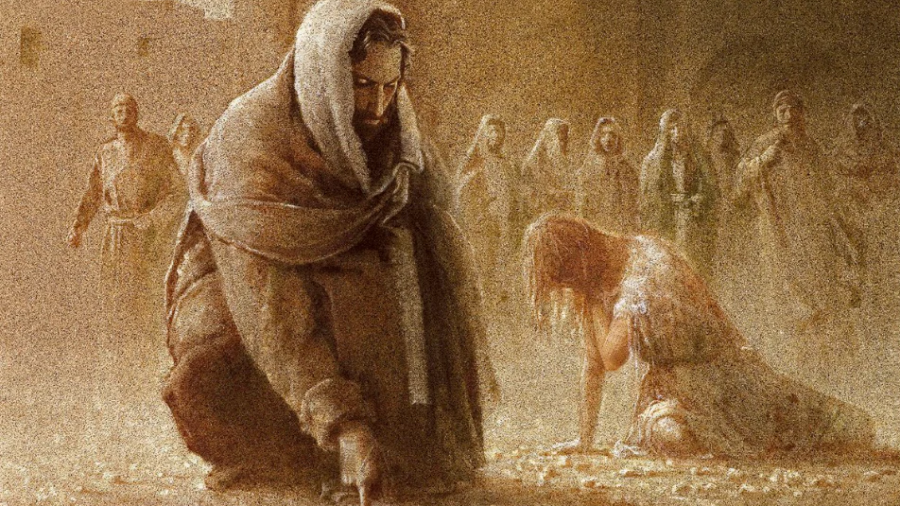
In John 8:1-11, the Pharisees bring a woman caught in adultery before Jesus, hoping to trap Him between the demands of the Law and the message of grace He preached. According to the Law, the punishment for adultery was stoning, so they expected Jesus to either reject the Law or condemn the woman. Instead, Jesus responds with profound wisdom: “Let the one who is without sin be the first to throw a stone.” One by one, the accusers leave. In this moment, Jesus resets the entire foundation of the conversation. The Law is not dismissed, but it is placed within a deeper reality-the truth that all people are sinners in need of grace. The Gospel reveals a wisdom far greater than the rigid judgments of the world, showing that while sin must be taken seriously, it must also be approached through the lens of God’s love and mercy.

When the crowd disappears, Jesus asks the woman, “Has no one condemned you?” and then says, “Neither do I condemn you.” This does not mean that her sin is ignored or excused, but that the punishment she deserved would ultimately be carried by Christ Himself on the cross. The Law exposes sin, but it cannot free us from it; only grace can do that. The cross reveals this mystery of the Gospel: sin is real and must be judged, yet God Himself takes that judgment upon Himself out of love for humanity. In this way, Jesus removes not only physical punishment but also the invisible stones of shame, humiliation, and self-condemnation that so often weigh down our hearts.

Finally, Jesus tells the woman, “Go now and leave your life of sin.” True faith is not built on fear or self-effort, but on receiving God’s unconditional love. Because we are no longer condemned, we are free to walk in a new life. Many people try to overcome sin through willpower alone, only to fall into cycles of guilt and self-punishment. But the Gospel teaches that transformation begins with grace. When we know that God already sees our sin and still loves us, our hearts open to a deeper relationship with Him. From that relationship flows the strength to leave sin behind and live in freedom. This story reminds us that the foundation of our faith is not our perfection, but the boundless mercy of Christ who calls us out of condemnation and into new life. .

God-created-man-in-his-own-image-300x300-1

The Image of God

San Francisco Gratia Community Church held a graceful Sunday service on March 8. Pastor Tzeng delivered a message titled “God’s Creation” based on Genesis 1. He shared that this will be the beginning of a sermon series on the book of Genesis. Below is a summary of today’s message.

Genesis 1 begins with the powerful truth that God created the universe out of nothing, forming the world with intention and beauty. At the climax of creation, humanity is made in God’s own image, male and female. This means that the deepest part of who we are is not simply our physical body or our intellect, but the spiritual imprint of God placed within us. Ecclesiastes says that God has set eternity in the human heart, reminding us that our lives are connected to something far greater than the visible world. Because we bear God’s image, understanding who God is helps us understand who we are. Scripture tells us clearly that God is love, and this love was revealed most fully through Jesus Christ, who came to the world and gave His life on the cross. Therefore, the meaning of our lives flows from this truth: we were created to receive God’s love and to reflect that love outward in the way we live.

Genesis also teaches that humanity was created “very good,” yet in the fallen world this original goodness often feels hidden. Sin, anxiety, selfishness, and brokenness cloud the image of God within us, much like a hazy mirror that no longer reflects clearly. The apostle Paul describes this condition by saying we now see only dimly, as if through a blurred reflection. When we look around the world today-filled with loneliness, addiction, anger, and despair-it becomes clear that humanity is living far from its original purpose. We were not created to live in constant confusion or emptiness. Rather, God created us to live in love, to know Him, and to reflect His goodness in the world. The tragedy of sin is that it covers over this identity, causing us to forget who we truly are.

Yet the message of the Gospel is that the image of God within us can be rediscovered and restored. Just as Simba in *The Lion King* eventually realizes that his father’s image lives within him and returns to his true calling, we too rediscover our identity when we encounter God again. We cannot find this purpose on our own or through the world’s distractions; it is revealed through Jesus Christ, who is the perfect image of God. As we listen to God’s Word, receive His grace, and enter into a personal relationship with Christ, the image of God within us becomes clearer again. This rediscovery gives our lives direction and meaning-not a purpose centered only on ourselves, but a purpose connected to God’s greater work of restoring His Kingdom in the world.

maxresdefault

Jesus changes water into wine

San Francisco Gratia Church held a graceful Sunday service on February 15. Pastor Walker delivered a message titled “The Wedding Banquet at Cana” based on John 2. Below is a summary of the message.

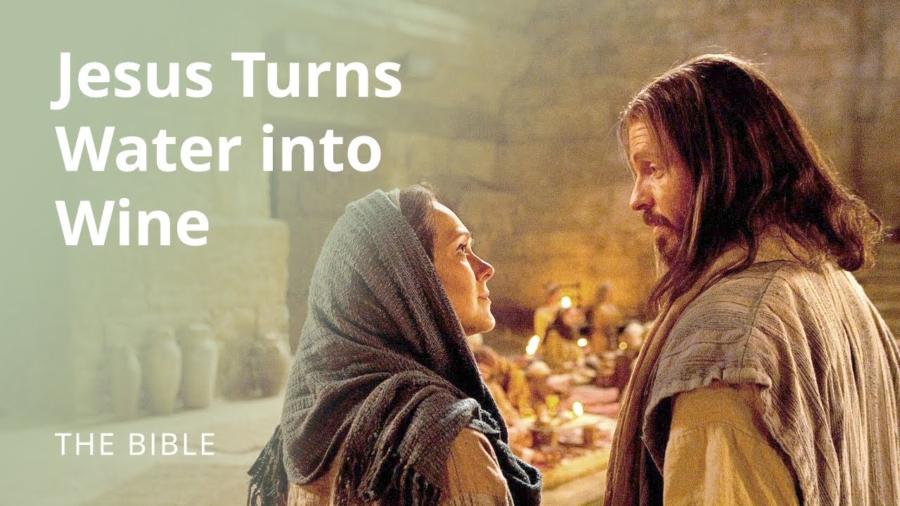
In today’s passage, we see Jesus at a wedding in Cana where the wine runs out-a moment that feels small, yet carries deep meaning. A wedding banquet is meant to be joyful, with the bridegroom at the center, but when the wine is gone, the celebration falters. This reflects the reality of a life centered on the world: eventually, the joy runs dry. We pursue many “husbands”-success, pleasure, money, recognition-hoping they will satisfy our thirst, yet something remains unresolved within us. Jesus’ response to His mother, “Why involve me?” invites us to ask ourselves the same question: have we truly involved Him in the center of our lives? The Kingdom of God is like a wedding banquet, but Christ must be the true Bridegroom. When He is not at the center, our joy is temporary and fragile; when He is, everything changes from the inside out.

Before the miracle happens, Jesus commands the servants to fill six large stone jars with water-an ordinary, heavy, time-consuming task. This teaches us that transformation often begins with preparation. The jars, filled to the brim, represent the faithful, patient work of prayer, obedience, study of the Word, and steady growth in every area of life. Just as God created in six days before entering Sabbath rest, and just as history prepared for Christ’s coming, there is often a long season of filling before the qualitative change occurs. We cannot pray for miracles while neglecting the work of faith. To center our lives on Christ means actively preparing-strengthening our spiritual life, relationships, character, and stewardship-trusting that God uses these faithful acts as the soil for transformation.

When the water becomes wine, the master of the banquet declares that the best wine has been saved for last. Unlike the world’s diluted joy that fades over time, life in Christ grows deeper and richer. The Kingdom does not deteriorate; it matures. As we allow Jesus to be at the center and faithfully “fill the jars” of our lives with grace, what begins as ordinary water becomes something qualitatively new. This miracle reveals the pattern of the Gospel-through the cross and resurrection, Christ transforms what is empty into fullness and what is ordinary into glory. If we desire change in our lives, the answer is not chasing more worldly wine, but centering everything on Jesus. Then, by His grace, our lives will not fade but grow better and deeper, reflecting the joy of His Kingdom.


hq720

The Faith of Ruth

In the days when the judges ruled, there was a famine in the land. So a man from Bethlehem in Judah, together with his wife and two sons, went to live for a while in the country of Moab. The man’s name was Elimelek, his wife’s name was Naomi, and the names of his two sons were Mahlon and Kilion. They were Ephrathites from Bethlehem, Judah. And they went to Moab and lived there.

on-mission

There’s Still a Mission

Since, then, you have been raised with Christ, set your hearts on things above, where Christ is, seated at the right hand of God. Set your minds on things above, not on earthly things. For you died, and your life is now hidden with Christ in God.

Lorem ipsum dolor sit amet, consectetur adipiscing elit. Ut elit tellus, luctus nec ullamcorper mattis, pulvinar dapibus leo.

Blessings+of+God

The Birth of Blessings

She said to him, “Pardon me, my lord. As surely as you live, I am the woman who stood here beside you praying to the Lord. I prayed for this child, and the Lord has granted me what I asked of him. So now I give him to the Lord. For his whole life he will be given over to the Lord.” And he worshiped the Lord there.

images

The Parable of the Wedding Banquet

Jesus spoke to them again in parables, saying: “The kingdom of heaven is like a king who prepared a wedding banquet for his son. He sent his servants to those who had been invited to the banquet to tell them to come, but they refused to come.

“Then he sent some more servants and said, ‘Tell those who have been invited that I have prepared my dinner: My oxen and fattened cattle have been butchered, and everything is ready. Come to the wedding banquet.’

“But they paid no attention and went off—one to his field, another to his business. The rest seized his servants, mistreated them and killed them. The king was enraged. He sent his army and destroyed those murderers and burned their city.

“Then he said to his servants, ‘The wedding banquet is ready, but those I invited did not deserve to come. So go to the street corners and invite to the banquet anyone you find.’ So the servants went out into the streets and gathered all the people they could find, the bad as well as the good, and the wedding hall was filled with guests.

“But when the king came in to see the guests, he noticed a man there who was not wearing wedding clothes. He asked, ‘How did you get in here without wedding clothes, friend?’ The man was speechless.

“Then the king told the attendants, ‘Tie him hand and foot, and throw him outside, into the darkness, where there will be weeping and gnashing of teeth.’ “For many are invited, but few are chosen.”

standard-graphic-campaign-more-than-number-midwives-feared-god-720x390

The Midwives who Feared God

Exodus 1:1-22 The king of Egypt said to the Hebrew midwives, whose names were Shiphrah and Puah, “When you are helping the Hebrew women during childbirth on the delivery stool, if you see that the baby is a boy, kill him; but if it is a girl, let her live.” The midwives, however, feared God and did not do what the king of Egypt had told them to do; they let the boys live.
33656_forgiveness01_10307_crop

The Power of Forgiveness

“You have heard that it was said, ‘Eye for eye, and tooth for tooth.’ But I tell you, do not resist an evil person. If anyone slaps you on the right cheek, turn to them the other cheek also. And if anyone wants to sue you and take your shirt, hand over your coat as well. If anyone forces you to go one mile, go with them two miles. Give to the one who asks you, and do not turn away from the one who wants to borrow from you.

“You have heard that it was said, ‘Love your neighbor and hate your enemy.’ But I tell you, love your enemies and pray for those who persecute you, that you may be children of your Father in heaven. He causes his sun to rise on the evil and the good, and sends rain on the righteous and the unrighteous. If you love those who love you, what reward will you get? Are not even the tax collectors doing that? And if you greet only your own people, what are you doing more than others? Do not even pagans do that? Be perfect, therefore, as your heavenly Father is perfect.”